+91 9893014167
  1 (888) 316-3286
 +44 20 3807 2189
 Chat on WhatsApp



Ecommerce SEO Service
Ecommerce SEO gets your categories and products found when shoppers search Google or ask an AI assistant what to buy. SEOValley fixes the catalogue-wide problems that hold online stores back, then grows the pages that bring in revenue.
An online store isn’t a brochure site with more pages. Thousands of product URLs, overlapping categories, filters, variants and out-of-stock items all create problems that a standard SEO campaign never touches. We work at catalogue scale: fix the templates and rules once, then hand-optimise the categories and products that earn the most.
What we do for online stores
- Category pages first: they carry the broad commercial searches, so they get unique copy, clean headings, internal links and FAQs that answer buying questions.
- Product templates: titles, descriptions, image alt text and headings fixed by rule across the whole catalogue, then priority products optimised by hand.
- Filters, variants and duplicates: faceted navigation, sort parameters and colour or size variants controlled with canonicals and crawl rules, so Google spends its time on pages that sell.
- Product structured data: price, availability, ratings and reviews marked up, so listings can show stars and stock in Google and AI assistants read your product facts correctly.
- Out-of-stock and discontinued products: kept live with alternatives while they may return, redirected to the closest category when they’re gone, so earned rankings aren’t thrown away.
- Speed on real phones: heavy category and product templates found and fixed, because most shoppers browse on mobile.
- Content and links: buying guides and comparison pages that win research searches, plus outreach for links to the categories you most want to grow.
- AI shopping answers: clear product facts, reviews and comparisons that ChatGPT, Perplexity and Google’s AI features can quote when people ask which product to buy.
How it works
We start with a full crawl of the store, a review of Search Console and your analytics, and keyword research by category. You approve the keyword list, and on-page and technical work begins within seven days. Each month we report organic revenue, transactions and conversion rate alongside rankings and AI visibility, so you see what the work earns, not just where you rank.
We work with Shopify, WooCommerce, Magento, BigCommerce and custom-built stores, and alongside your developers when a platform change is needed.
Results for online stores
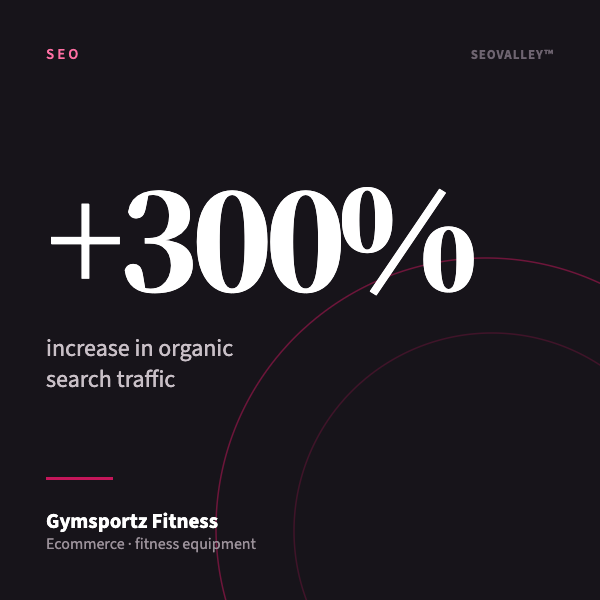
Gymsportz Fitness grew organic search traffic by 300% and doubled orders in six months, with 45 keywords in Google’s top 10. Herman Miller grew organic search traffic by 2,515%.
Ecommerce SEO runs on our six monthly SEO plans, from US$250 a month, with no setup fee and no long contract. Larger catalogues are quoted on the keywords and pages in scope. If you also run Shopping ads, our Google Shopping team works from the same product data. Not sure where to start? Begin with a free SEO audit of your store.
Ecommerce SEO: frequently asked questions
How is ecommerce SEO different from regular SEO?
Ecommerce SEO works at catalogue scale: category and product page templates, faceted navigation and duplicate-content control, product schema, and internal linking across thousands of URLs rather than a handful of pages.
Which platforms do you work with?
We work with Shopify, WooCommerce, Magento, BigCommerce and custom-built stores, and we work alongside your developers where platform changes are needed.
Do you optimise individual product pages?
Yes. We optimise category pages first because they carry the highest-volume keywords, then work through product templates and priority products.
How much does ecommerce SEO cost?
Ecommerce SEO runs on our monthly plans, which carry no setup fee, and larger catalogues are quoted on the number of keywords and pages in scope.
How do you handle a catalogue with thousands of products?
Templates and rules first. We fix the patterns that repeat across the whole catalogue, meaning titles, descriptions, headings, internal links and structured data, then hand-optimise the pages that carry the most revenue.
What happens to out-of-stock and discontinued products?
If the product may return, we keep the URL live and surface alternatives on it. Once it is gone for good, we redirect to the closest live category. Deleting the page outright throws away the links and rankings it earned.
Do you fix duplicate content from filters and variants?
Yes. Faceted navigation, sort parameters and colour or size variants are the most common source of duplication on an ecommerce site. Canonical tags, parameter handling and crawl rules resolve it.
Do you add product structured data?
Yes. Product rich snippets carrying rating, price, review and offer data are part of the standard campaign setup, so your listings can show stars and availability in the results.
Should category pages or product pages come first?
Category pages usually carry the broader commercial terms and the larger share of revenue, so they get attention first. Product pages then win long-tail and model-number searches.
Can you help with Google Merchant Center as well?
Yes. Feed problems and product disapprovals are handled through our Google Shopping service, which runs alongside the organic work rather than separately from it.
How is ecommerce SEO measured?
By organic revenue, transactions and conversion rate, not rankings alone. Monthly traffic reporting covers traffic source, revenue and conversion rate together.
Is site speed part of the work?
Yes. Site download speed analysis is part of the technical evaluation, and slow product and category templates are usually among the first issues flagged.