+91 9893014167
 1 (888) 316-3286
 +44 20 3807 2189
 Chat on WhatsApp


Last updated: 11 October 2026
Your best prospect might search for your category twice a year. Then they spend months reading, comparing and asking colleagues, and lately asking ChatGPT, before anyone fills in your contact form.
The ranking factors that matter most for B2B companies are the ones Google has confirmed for everyone: relevant, original content that matches what the searcher wants, evidence of real expertise, links from other sites, and a site Google can crawl and render. What changes in B2B is the order of priority. With small search volumes, every page that matches a buying-stage question carries more weight, and appearing on the buyer’s shortlist early matters more than traffic.
Key facts
- Google’s guide to its ranking systems, current in October 2026, confirms that PageRank and link analysis are still part of its core ranking systems.
- Google’s SEO starter guide states that E-E-A-T is not itself a ranking factor, although its systems look for signals that align with it.
- Google’s page experience documentation says Core Web Vitals are used by its ranking systems, but relevant content can still rank with a sub-par page experience.
- 6sense’s 2025 B2B Buyer Experience Report, based on nearly 4,000 buyers, found the winner came from the Day One shortlist 95% of the time.
- The same 6sense report found buyers made first contact with sellers 61% of the way through their journey, down from about 69% a year earlier.
- Forrester reported in January 2026 that 94% of business buyers now use AI in their buying process, up from 89% a year before.
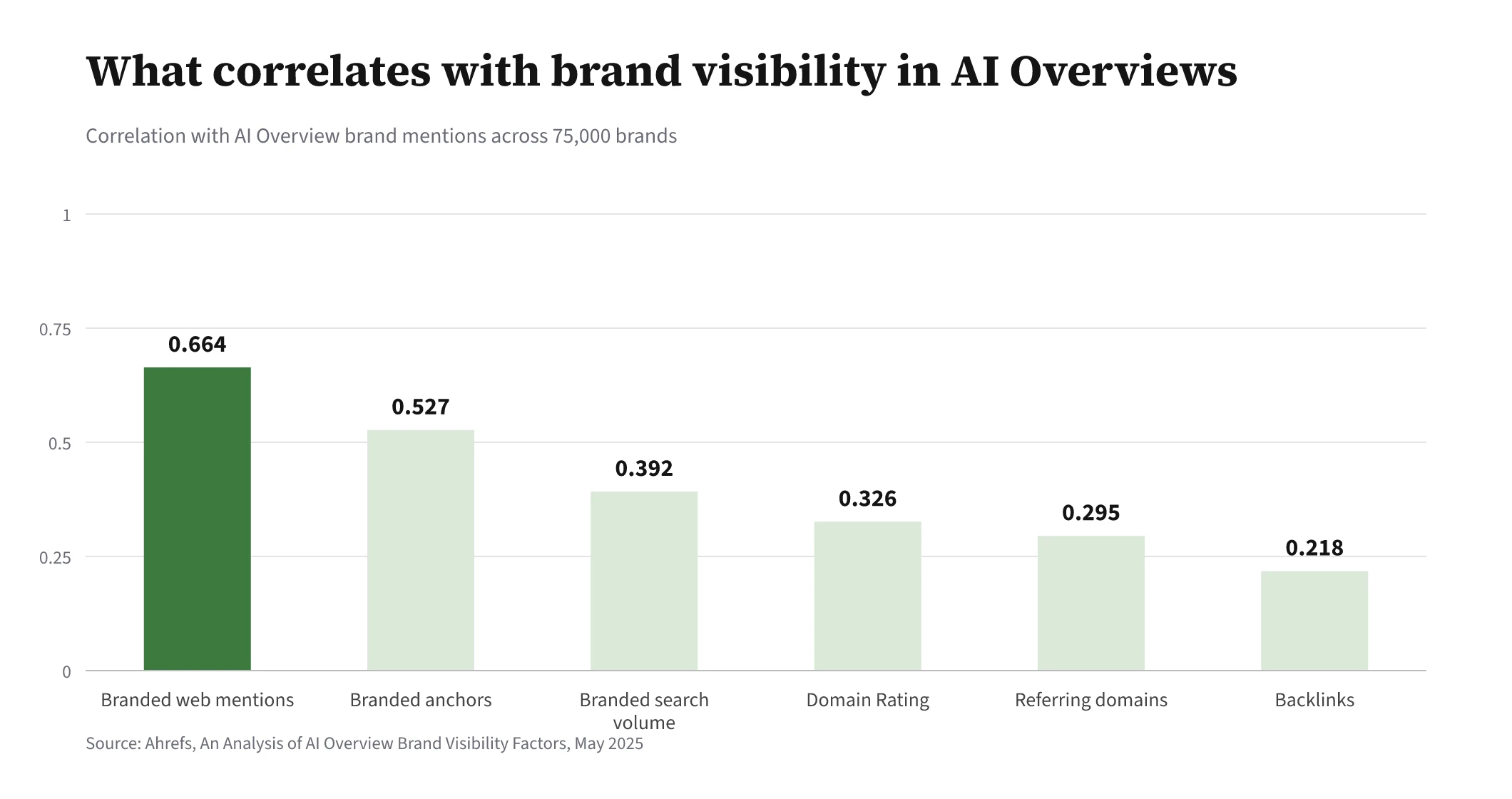
- Ahrefs’ May 2025 study of 75,000 brands found branded web mentions correlated with AI Overview visibility at 0.664, against 0.218 for backlinks.
This article separates what Google has confirmed from what comes from correlation studies, then walks through the factors in the order we would fix them for a B2B site: pages, proof, technical basics, links and brand, and finally how AI assistants change vendor research.
Which ranking factors has Google actually confirmed?
Google has confirmed far fewer specific factors than most “top ranking factors” lists suggest. What it does publish is a guide to its ranking systems, and that is the best primary source we have.
Among the systems listed there:
- Link analysis and PageRank. Google says PageRank has evolved a lot but “continues to be part of our core ranking systems”.
- Original content systems. Built to show original reporting ahead of pages that merely cite it.
- Reliable information systems. Designed to surface more authoritative pages and demote low-quality content.
- Reviews system. Rewards insightful analysis and original research from people who know the topic well.
- BERT and other language systems. Used to understand what a query means, not just which words it contains.
Google’s page experience documentation adds that Core Web Vitals are used by its ranking systems. And the SEO starter guide is just as useful for what it rules out: no magic word count, and “Thinking E-E-A-T is a ranking factor? No, it’s not.”
Almost everything else you read, including our own observations below, is correlation or field experience. That is fine, as long as everyone knows which is which.
| Factor | Google’s position | Evidence | B2B priority |
|---|---|---|---|
| Relevant, original content | Confirmed (ranking systems guide) | Primary source | Highest |
| Links and PageRank | Confirmed as part of core ranking | Primary source | High: few, relevant links |
| Core Web Vitals and page experience | Confirmed, but relevance wins | Primary source | Medium |
| E-E-A-T | Not a ranking factor in itself | Primary source | High for finance, legal, health |
| Brand mentions and brand search | Not confirmed | Correlation studies | Medium to high |
| Word count | Google says it does not matter | Primary source | Ignore |
Why does B2B SEO need different priorities?
Because B2B buyers decide early and quietly, and search volumes are tiny. A keyword with 90 searches a month can be worth more than a consumer term with 9,000, if those 90 people are finance directors with a budget.
The best recent data on this comes from the 6sense 2025 B2B Buyer Experience Report, based on nearly 4,000 buyers. Buyers filled about four spots on their shortlist on Day One of the journey, and chose a vendor from that Day One shortlist 95% of the time. First contact with a seller came, on average, 61% of the way through the process.
Put simply, if you are not visible during the research that happens before anyone talks to sales, you are probably not on the list.
That changes what “ranking well” means. Traffic matters less than being present for the specific questions a buying group asks: what does this cost, how does it compare, will it work with what we have, and who else uses it?
Which pages matter most for B2B rankings?
The pages that match late-stage buying questions matter most, and most B2B sites either do not have them or hide them. In our experience these earn the leads:
- Comparison pages. “Your product vs. competitor” and “alternatives to” pages. Be fair; buyers can tell when you are not.
- Pricing pages. Even a range or a “from” figure. Buyers search for pricing whether you publish it or not, and a competitor or review site will answer if you do not.
- Use-case and industry pages. One page per problem you solve or sector you serve, with an example from that sector.
- Integration and compatibility pages. Technical buyers search for exactly this, often by product name.
- Case studies with numbers. Named clients, dates and measurable results.
What is overrated? Top-of-funnel blog posts on broad industry topics. They attract readers who will never buy, and they are the content type most exposed to AI answers taking the click. We would build the pages above first.
For software businesses specifically, our post on optimising a SaaS product homepage covers the page that usually carries most branded traffic.
How does a B2B site show expertise and trust to Google?
With visible evidence rather than claims. Google’s helpful content guidance says E-E-A-T itself is not a ranking factor, but its systems use “a mix of factors” to identify content that shows it, and they give extra weight to trust on topics affecting people’s financial stability, health or safety.
If you sell finance, insurance, legal, health or security products to businesses, assume your content is judged by that higher standard.
In practice, B2B expertise shows up as:
- named authors with real job titles and relevant experience
- original numbers from your own work, not recycled industry statistics
- case studies with named clients and measurable outcomes
- clear company details: who you are, where you are, how to reach a person
- reviews on independent platforms your buyers already trust
We have written more on making E-E-A-T visible through markup and evidence.
Which technical basics still matter for B2B sites?
The basics that decide whether Google can find, render and understand your pages still matter most. The rest is usually tuning.
B2B sites have a few recurring problems in our audits. Product pages built in JavaScript frameworks that do not render key content for crawlers. Gated PDFs holding the best material, invisible to search. Resource libraries that create thousands of thin tag and filter pages. Old microsites and subdomains splitting authority.
On speed, be realistic. Google’s page experience documentation says Core Web Vitals are used in ranking, but also that Google “always seeks to show the most relevant content, even if the page experience is sub-par”. A good experience helps when many pages are equally helpful. It will not rescue a page that does not answer the question.
Our view: fix crawling, rendering, indexing and duplicate pages first, then speed. A technical SEO review should find the first four before anyone argues about milliseconds.
Do links, digital PR and brand searches still affect B2B rankings?
Links do, by Google’s own account. Brand searches probably help, but Google has not confirmed them as a ranking factor, so treat that as informed guesswork.
PageRank is still listed as part of Google’s core ranking systems, and the SEO starter guide notes that most new pages Google finds every day are discovered through links. For B2B, a handful of links from trade publications, industry associations and partner sites usually outweighs hundreds from general directories.
Brand is where the evidence gets interesting, and weaker. Ahrefs studied 75,000 brands and their visibility in Google’s AI Overviews. Branded web mentions had the strongest correlation, at 0.664. Branded search volume scored 0.392. The raw number of backlinks scored 0.218. Ahrefs itself stresses that correlation is not causation.
Our honest take: well-known brands get mentioned, searched for and linked to, and they tend to rank. Which causes which is hard to untangle. But the practical answer is the same either way. Get your company discussed in the places your buyers read, which is the job of digital PR, and branded demand usually follows.
How do B2B buyers use AI assistants for vendor research?
Almost all of them now use AI at some point, and many treat it as their most useful source. Forrester reported in January 2026 that 94% of business buyers use AI in their buying process, up from 89% the year before. Twice as many buyers named generative AI or conversational search as a more meaningful source than any other.
That makes AI answers part of the shortlist. If a buyer asks an assistant for the main vendors in your category and you are not named, you may never reach the Day One list.
For Google’s own AI features, the rules are the same as for search. Google’s AI features documentation says there are no additional requirements or special optimisations needed to appear in AI Overviews or AI Mode. But the pool of cited pages is wider than page one. Ahrefs’ March 2026 study found only 37.9% of URLs cited in AI Overviews also appeared in the top 10 results.
So specific pages answering specific questions, such as pricing, comparisons and integrations, have a fair chance of being cited even if they do not rank first. Our article on what gets cited in AI Overviews looks at how that varies by query type.
If you want one place to start, list the ten questions your sales team hears most often and check whether your site answers each one on a page of its own. In our experience, many B2B sites answer only a few of them.
Then check that Google can crawl and render those pages, put a named expert and a real example on each, and get your company mentioned in the places your buyers read.
If you would like help with that, SEOValley’s SEO services start with an audit of exactly these pages and signals.
About the author
Shabir MS leads SEOValley Solutions and has worked in search since 2005. These days most of his time goes on how brands show up in AI answers, and on separating what the data actually shows from what gets said at conferences. Read more from Shabir MS.
Frequently asked questions
How long does B2B SEO take to show results?
Usually several months for competitive terms, though fixes to existing pages and technical problems can show sooner. Long buying cycles also mean leads from SEO often arrive weeks after the first visit.
Should B2B companies publish pricing for SEO?
Publishing at least a price range helps, because buyers search for pricing either way. If you stay silent, review sites and competitors answer the question for you.
Is keyword search volume a good guide for B2B?
Only partly. Many valuable B2B terms show very low or zero volume in keyword tools. Questions from your sales calls are often a better guide than volume data.
Do B2B companies need separate optimisation for ChatGPT and other assistants?
Google says its AI features need no special optimisation beyond normal SEO. For other assistants, the same basics apply: clear answers on your site and frequent mentions of your company on sites your buyers trust.
Is E-E-A-T a ranking factor?
No. Google’s SEO starter guide says plainly that it is not, but Google’s systems look for signals that match it, and give them more weight on topics affecting money, health or safety.