If you’re signing off a 2027 marketing plan this month, someone has probably told you to carve out an “AI budget”. Maybe it was an agency pitch. Maybe it was a board member who now asks ChatGPT everything.
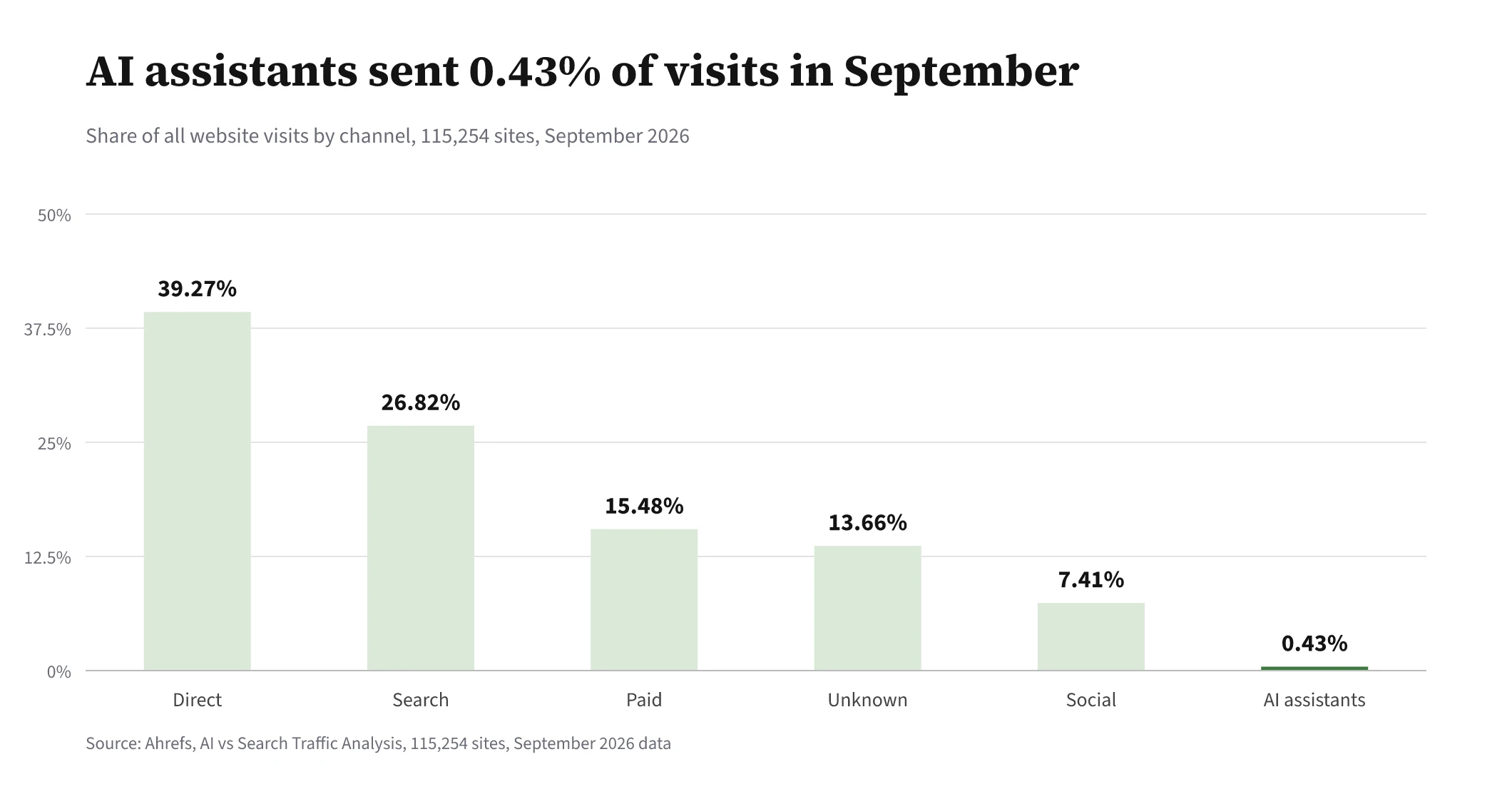
Our answer is no, don’t pull money out of search to fund a separate AI line. AI assistants sent 0.43% of website visits in September 2026, against 23.96% from Google alone. Keep the core budget in search, add a small line for measuring AI visibility, and point your PR and authority spend at the sources AI tools read.
Key facts
- Ahrefs’ AI vs Search Traffic Analysis for September 2026 found AI assistants sent 0.43% of visits across 115,254 sites, while Google sent 23.96%.
- Similarweb reported on 3 September 2026 that AI platforms sent an average of 770.7 million referral visits a month between June 2025 and May 2026, up 117.4% year on year.
- TechnologyChecker’s analysis of Cloudflare Radar data, updated 1 October 2026, put Google’s share of search referrals at 89.04% in Q3 2026, up from 81.10% a year earlier.
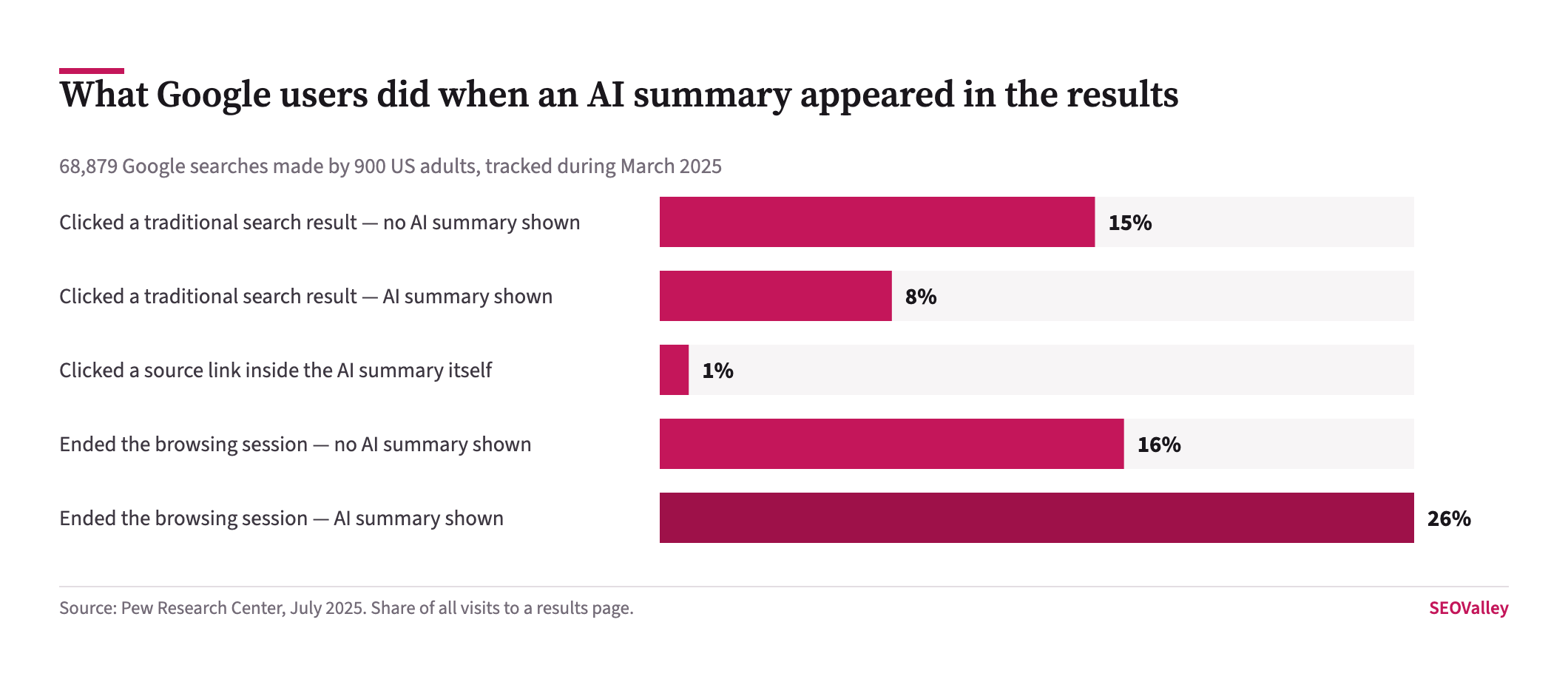
- SparkToro reported on 8 June 2026 that 68.01% of US Google searches ended without a click from January to April 2026, up from 60.45% in 2024.
- Gartner’s 2026 CMO Spend Survey, published 11 May 2026, found marketing budgets at 7.8% of company revenue, with an average of 15.3% of those budgets going to AI work.
- Adobe reported on 17 June 2026 that AI traffic to US retail sites converted 54% better than non-AI traffic, while AI traffic to travel sites converted 28% worse.
Below we go through what the latest traffic, spend and conversion data actually says, where the hype runs ahead of the numbers, what one of our own clients saw over the past two years, and how we’d split a 2027 budget between organic search, AI visibility, PR and Google Ads.
How much traffic does AI search actually send?
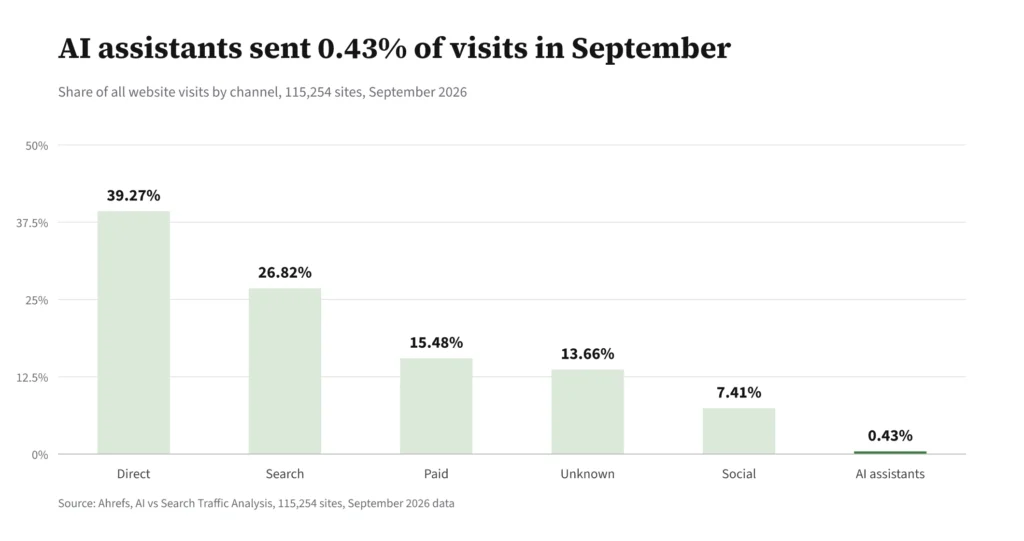
Very little, so far. Ahrefs’ live AI vs Search Traffic Analysis tracks 115,254 sites, and in September 2026 AI assistants sent 5.3 million visits, or 0.43% of the total. Google sent 301.8 million, or 23.96%. ChatGPT, the biggest AI source, sent 4.3 million, which is 0.34%.
Compare that with the channels you already pay for: direct 39.27%, search 26.82%, paid 15.48%, social 7.41%.
The growth is real, and I don’t want to wave it away. Ahrefs saw ChatGPT visits rise 33.2% from July to August and 14.1% from August to September, while Google traffic fell 7.2% and 2.7% over the same months. Similarweb’s study of AI referral traffic by industry found AI platforms sent an average of 770.7 million referral visits a month worldwide between June 2025 and May 2026, up 117.4% on the year before.
But doubling a small number gives you a slightly bigger small number. Similarweb itself says AI referrals remain “a low single-digit percentage of most sites’ total traffic”.
Google isn’t losing its grip on referrals either. An analysis of Cloudflare Radar data by TechnologyChecker puts Google at 89.04% of search referrals in Q3 2026, up from 81.10% in Q3 2025, and 90.51% in September on provisional figures. ChatGPT’s share was 0.640% across the quarter and only 0.392% in September. That’s a secondary source, so treat it as a second opinion, but it points the same way as Ahrefs.
So why are analysts telling marketing chiefs to fund AI?
Because AI is shaping how buyers form opinions, and big companies are already paying for it by moving money from other lines. Gartner’s 2026 CMO Spend Survey found marketing budgets at 7.8% of company revenue, barely up from 7.7% in 2025. Within that, marketing chiefs put an average of 15.3% into AI work. The most AI-ready teams put in 21.3%.
Flat budgets plus a 15% AI slice means something else got squeezed. And only 30% of respondents reported mature AI readiness, so plenty of that money is being spent by teams still working out what to do with it.
Look at who was asked, too. The sample was 401 marketing leaders in North America, the UK and Europe, surveyed January to March 2026, and most work at companies with more than $1 billion in revenue. A percentage taken from a billion-dollar budget is not a benchmark for a 30-person firm.
The most useful line from Gartner this year came in a second release from the same survey. Awareness and conversion now take 62.6% of media spend, loyalty and retention spending is down 29% to under 15%, and Gartner warns that less mature teams may be “over-indexing on short-term optimization and channels that are easiest to measure and automate”.
That warning cuts both ways. Don’t judge AI visibility purely on referral clicks, because that’s measuring the wrong thing. But don’t throw money at a shiny new budget line either. In our view, a separate “AI budget” is mostly a relabelling exercise.
Isn’t Google turning into an AI answer engine anyway?
Yes, and that’s the strongest reason to care about AI visibility without moving money away from Google.
What it looks like: Google’s CEO told investors on the Q2 2026 earnings call that AI Mode has “surpassed 1 billion monthly active users” and that AI Overviews and AI Mode have been merged into a single Search experience. The Gemini app has 950 million monthly users. Search & other revenue grew 17%.
Key data: Clicks are thinning out. SparkToro’s analysis of Similarweb clickstream data found 68.01% of US Google searches ended without a click from January to April 2026, up from 60.45% in 2024. Oddly, the same study found only 0.34% of searches went into AI Mode in that period. A billion monthly users and a third of a percent of searches can both be true, but it tells you most people still meet Google’s AI as an Overview on a normal results page.
Google says it is “sending billions of clicks to websites every week through AI features in Search”. As Matt G. Southern pointed out in Search Engine Journal, Google reports revenue precisely ($63.27 billion, up 17%, slowing from 19% in Q1) but gives no figures for clicks to websites. “Billions” is not a number you can plan a budget around.
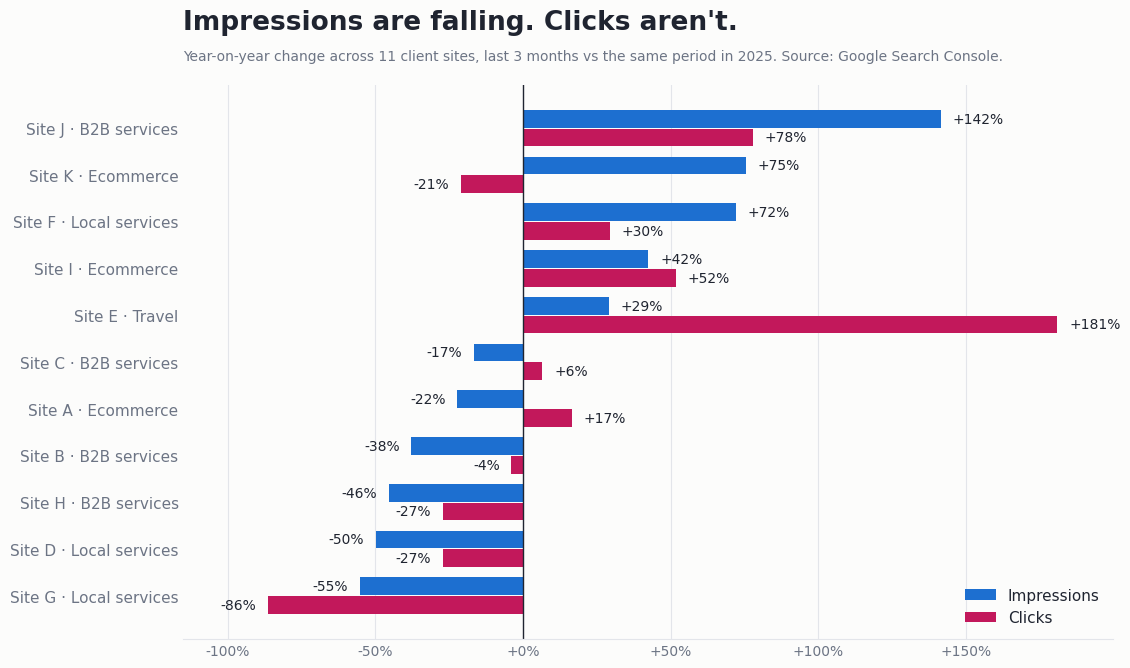
Why it matters: The AI answer most of your buyers see is Google’s own. Getting into it is search work. If your rankings are steady but traffic is sliding, our piece on why rankings hold while clicks keep falling explains what’s going on.
Do visitors from AI tools convert better?
Sometimes, and it depends heavily on what you sell. Adobe’s 2026 report on AI traffic, drawing on more than 1 trillion visits to US retail sites, found AI traffic to retail rose 138% year on year in May 2026 (and 1,324% since October 2024) and converted 54% better than non-AI traffic.
Travel went the other way. AI traffic to travel sites rose 194% year on year but converted 28% worse than non-AI traffic.
My read: someone who has asked an AI tool to compare three products and then clicks through is often close to buying. Someone planning a trip may be clicking around to check what the AI told them. Same channel, very different intent.
Be careful with growth percentages as well. In Similarweb’s industry data, Beauty grew 312.5%, but that took it from 473.3K to 2.0 million visits a month. News and Travel grew a more modest 115.6% each, yet both went from 20.6 million to 44.5 million. A big percentage on a small base still leaves a small base.
The only conversion figure that should move your budget is your own. If you can’t separate AI-referred visits in your reports yet, fix that first. Our analytics services page covers tracking these referrals properly.
Is AI visibility work different from SEO work?
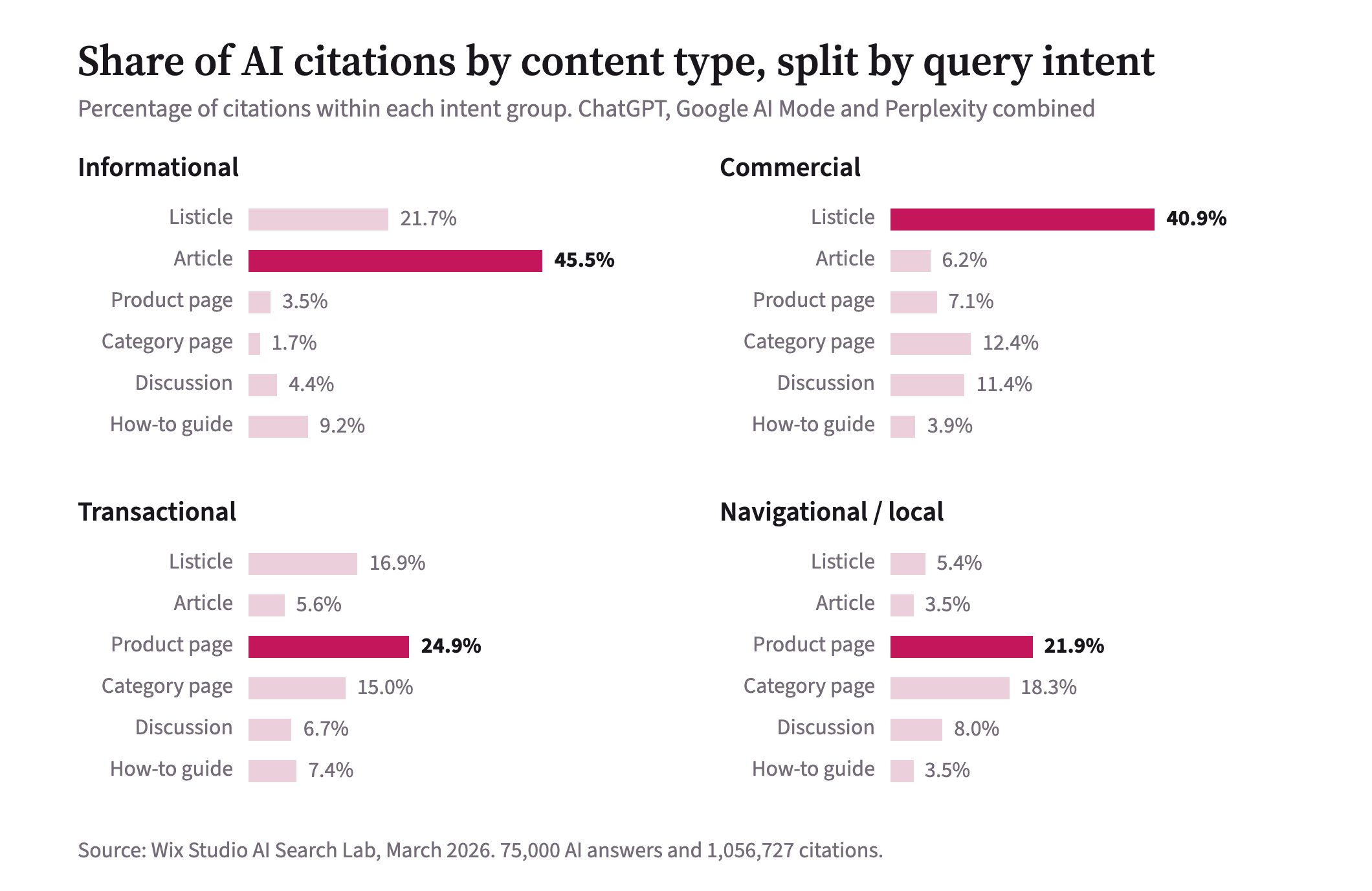
Mostly no. What gets a page cited in an AI answer is largely what gets it ranked: content built around the questions buyers actually ask, clear schema markup, and authority from links, listings and press coverage. We looked at the citation side in detail in what gets cited in AI Overviews.
Our clearest example is an Australian tiny-house builder. Between December 2024 and October 2026:
- Keywords ranking in Google’s top 5 (Australia) went from 2,377 to 4,974 (+109%).
- Keywords ranking in Google’s top 10 went from 3,699 to 6,329 (+71%).
- Links to the site inside AI answers across all engines: 2,755.
- Searches where Google’s AI Overview links to the site: 1,991.
- Times AI answers name the brand: 952.
- Estimated monthly visits from AI answers: 1,425.
One honest caveat from the case study page: “AI-search tracking did not exist in December 2024, so AI figures are shown as they stand today.” So those AI numbers are a snapshot, not a before-and-after.
What struck us is that both sets of results came from one ordinary monthly SEO programme at SEOValley: audit, schema, buyer-question content, outreach and reporting. There was no separate AI budget and no separate AI project. The rankings and the AI citations grew from the same work.
Should you move SEO money into Google Ads while organic clicks fall?
Not as a replacement. Ads capture demand that already exists. They don’t build the authority that earns rankings and AI citations, and the traffic stops the day you stop paying.
Paid clicks aren’t cheap either. Benchmarks from WordStream and LocaliQ, as republished by TheeDigital, put the average Google Ads cost per click at $5.42, with a click-through rate of 6.64%, a conversion rate of 8.18% and a cost per lead of $66.69. That’s across 13,474 US search campaigns in 23 industries, April 2025 to March 2026. It’s a secondary source, so check your own account before reading too much into it.
Those numbers are fine for high-intent searches where a lead is worth far more than $66. They’re poor value for the broad, informational questions where AI answers now do most of the work. That’s where organic content still earns its keep, and where AI tools go looking for sources to cite.
The sensible split is the one we’ve recommended for years: use ads for the money terms and to test what converts, and use organic for the questions buyers ask on the way there. Our guide to combining organic and PPC goes through how the two feed each other.
How would we split a 2027 marketing budget?
Keep the core in search, and change what that money is aimed at. Here’s what we’re advising clients for 2027:
- Keep funding organic search, but aim it at buyer questions. Broad informational terms are where zero-click answers hurt most. Comparison, pricing, “which is best for” and problem-specific questions are where both rankings and AI citations still turn into enquiries.
- Add a measurement line. You can’t manage what you can’t see. Report AI citations, brand mentions in AI answers and AI-referred visits next to your rankings. We wrote about how to measure AI visibility when there’s no rank to track.
- Move PR and authority spend towards sources AI tools read. Industry publications, review sites, directories and comparison pages shape what AI tools say about you. Digital PR aimed at being mentioned in those places does double duty for rankings and AI answers.
- Treat Google Ads as demand capture. Fund it for high-intent terms where the cost per lead makes sense, not as a patch for falling organic clicks.
Notice what’s missing: a standalone AI line that takes money from search. The data doesn’t support it yet. If AI referrals keep doubling, revisit this in a year. Even then, most of the work will look a lot like good SEO.
| Budget line | What the 2026 data says | Our 2027 advice |
|---|---|---|
| Organic Google search | Google sent 23.96% of visits in September 2026 (Ahrefs); 68.01% of US searches end without a click (SparkToro) | Keep funding it, aimed at buyer questions rather than broad informational terms |
| AI assistants | 0.43% of visits (Ahrefs), but referrals up 117.4% year on year (Similarweb) | No separate budget; fund measurement so citations and AI visits are reported |
| PR and authority | Gartner warns against over-indexing on the easiest channels to measure | Shift towards mentions in sources AI tools read |
| Google Ads | Average CPC $5.42, cost per lead $66.69 (WordStream/LocaliQ via TheeDigital) | Use for high-intent demand capture, not as a replacement for organic |
Before you sign off 2027, pull three numbers from your own reports: how much traffic and how many leads came from organic search this year, how many visits you can trace to AI tools, and what Google Ads cost you per lead. If AI referrals are a rounding error, as they are for most sites, that tells you where the money should stay.
Then aim that search budget at buyer questions, add a line for measuring AI visibility, and point your PR at the places AI tools read. If you’d like a second opinion on how that applies to your site, our AI SEO services page explains how we approach search and AI visibility together.
About the author
Shabir MS leads SEOValley Solutions and has worked in search since 2005. These days most of his time goes on how brands show up in AI answers, and on separating what the data actually shows from what gets said at conferences. Read more from Shabir MS.
Frequently asked questions
If AI sends less than 1% of traffic, why spend anything on it now?
Because AI answers influence buyers before they ever click, and AI referrals more than doubled in a year according to Similarweb. Most of the spend that earns AI visibility is ordinary search and PR work, so the only genuinely new cost is measuring it.
Why can’t I see ChatGPT traffic in GA4?
Some AI visits arrive without referrer information, so analytics tools record them as direct traffic. Grouping known AI domains into their own channel and watching direct visits to deep pages gives you a clearer, though still incomplete, picture.
What share of a small-business budget should go to AI visibility in 2027?
There’s no reliable benchmark for small firms; Gartner’s 15.3% comes from mostly billion-dollar companies and covers all AI work. Our view is to keep most of the money in search and PR, and fund a modest measurement line first.
Will ads inside AI Mode or ChatGPT change the maths?
Possibly, but we haven’t seen verified performance figures we’d plan a budget around. Review it mid-2027 once there’s published data you can check.
Does Google still send clicks from AI Overviews?
Google says it sends billions of clicks a week through AI features in Search, but it publishes no exact figures. Your own Search Console and analytics data is the only number worth trusting here.